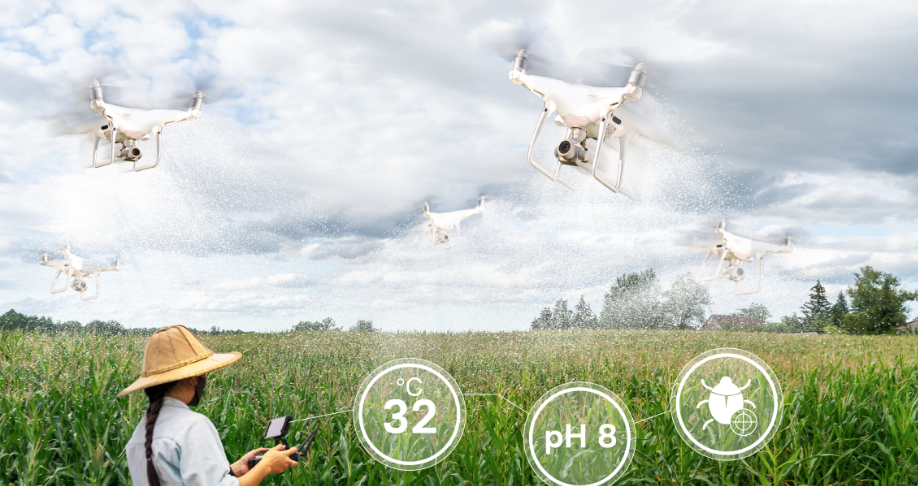
Artificial intelligence is reshaping agricultural sustainability through sensors, models, and data-driven decision support. It reallocates inputs, reduces waste, and enhances resilience by enabling precise pest forecasting, targeted irrigation, and nutrient delivery. Robust data governance and interoperability underpin trust among farmers, researchers, and policymakers. The path to scalable adoption requires interdisciplinary validation and standardized platforms that balance farm autonomy with sustainability goals, inviting further examination of how governance, metrics, and markets align.
What AI Replaces in the Field: Foundations of Agricultural Sustainability
AI technologies redefine core agricultural practices by shifting what needs direct human intervention and empirical oversight in the field. The shift emphasizes precision farming as a framework for deploying sensors, models, and decision-support tools that optimize inputs while reducing waste.
Data governance ensures transparency, accountability, and interoperability, aligning interdisciplinary insights with farmer autonomy and measurable sustainability outcomes.
How AI-Driven Tools Cut Waste and Boost Yields
Advances in AI-driven tools are translating raw data into actionable insights that reduce input waste while elevating crop yields. By integrating precision farming and real-time pest forecasting, systems optimize irrigation, nutrient delivery, and pesticide use, lowering environmental impact.
Interdisciplinary validation shows consistent yield gains and resource savings across contexts, supported by transparent metrics. The approach emphasizes scalable, data-driven decision-making for resilient agricultural ecosystems.
See also: Droven IO Enterprise Tech Innovation and Digital Solutions
Designing Data Platforms for Resilient Farms
The discourse emphasizes data governance and sensor interoperability to ensure quality, provenance, and secure access.
Interdisciplinary evaluation aligns architectural choices with agronomic goals, enabling robust analytics, fault tolerance, and transparent decision-support for farmers seeking autonomous, informed risk management.
Pathways to Adoption: From Farm Gate to Policy and Market
The analysis identifies adoption barriers across stakeholders, infrastructures, and governance, quantifying timelines and cost-benefit tradeoffs.
It emphasizes policy incentives, standardization, and transparency to align market mechanisms with resilient, data-informed farming practices and cross-sector collaboration.
Frequently Asked Questions
What Limits Do AI Tools Face in Smallholder Farming?
AI limitations include data access gaps, smallholder constraints, and cost barriers; technology adoption faces power, maintenance, sensor reliability, and connectivity gaps, while model interpretability, local adaptation, and standardization challenges shape knowledge transfer, farmer trust, and scale mismatches amid climate variability.
How Is Data Privacy Protected on Farms?
Data privacy on farms is protected through privacy by design, access controls, and encryption; data sharing is governed by clear consent and governance frameworks, with audits and anonymization to minimize risk, enabling farmers’ autonomy and trustworthy AI adoption.
Can AI Reduce Labor Costs Without Compromising Jobs?
AI adoption can reduce labor costs while preserving roles through automation-enhanced tasks; workforce transition programs, clear data ownership, and crop diversification strategies mitigate displacement, supported by rigorous, interdisciplinary analysis and freedom-minded, evidence-driven policy design.
What Are the Long-Term Environmental Risks of AI in Ag?
Long-term environmental risks of AI in ag include unintended consequences, ecological tradeoffs, data-driven interventions, and biased optimization. The approach emphasizes monitoring, transparency, adaptive management, lifecycle assessments, and interdisciplinary collaboration to sustain biodiversity, soil health, water quality, and resilience across systems.
How Is AI Evaluated for Fairness Across Crops and Regions?
Fairness auditing assesses model outputs across diverse crops and regions, while cross crop evaluation tests transferability and bias. The approach integrates agronomic data, socioeconomic indicators, and uncertainty analyses to ensure equitable performance and transparent decision-making.
Conclusion
Artificial intelligence redefines agricultural sustainability by translating sensors, models, and governance into measurable yield gains and resource savings. Exaggeratedly, even the stubborn soil becomes a data-rich ally, delivering near-miraculous precision in irrigation, fertilization, and pest control. Yet the rigor remains: transparent metrics, interoperable platforms, and interdisciplinary validation anchor claims in reproducible field trials. As adoption scales from farm gates to policy, AI’s data-driven stewardship promises resilient ecosystems, optimized inputs, and sustained food security across diverse agro-ecologies.
